
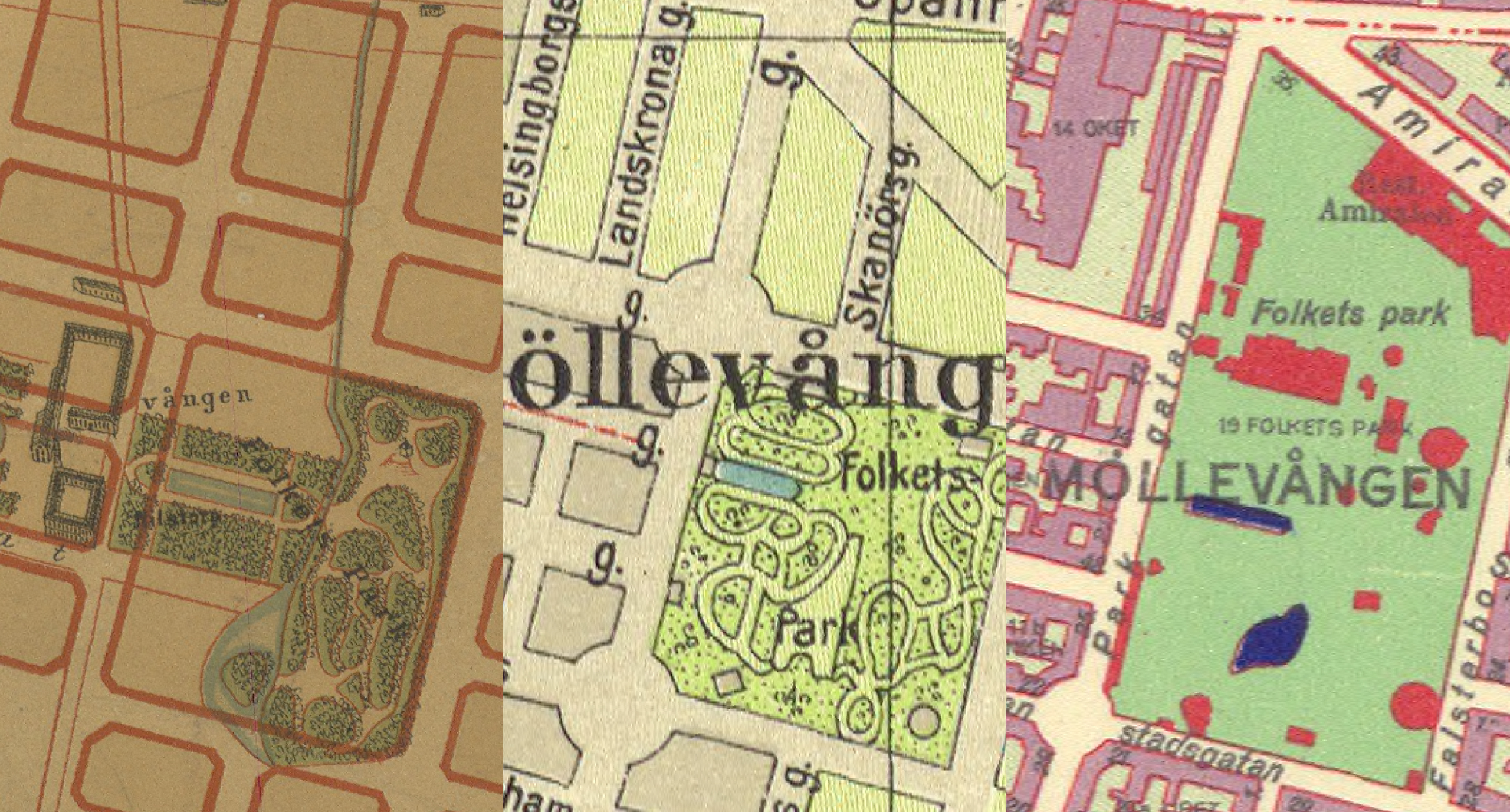

Mapping Skåne’s Early Labor Movement’s Meeting Places
At the turn of the 20th century, many of the spaces that now are described as the Öresund Regionconsisted of a rapidly growing network of interconnected industrial towns and cities. Within this urbanizing region, a new scene of left-wing politics had by the last decade of the 19th century become increasingly noticeable, folding a range of popular strata into a labor movement coalition often describing itself as “social democratic”. From this dynamic movement geography, new spatial forms used for public activities emerged. Some of these forms can still be seen in the urban environment. What were these spatial forms and their historical significance? And what materially remains of them as spaces still in use or as architectural heritage?
The 1879 completion of the impressive Workers’ Union & Assembly Hall in Copenhagen opened an entirely new imaginary horizon of what kinds of spaces popular movements could create. The six-story building on Rømersgade with its majestic grand ball room became an aspirational model far popular movements far beyond the Danish capital itself. Looking at this impressive union hall across the Öresund straits, unionist in Malmö struggling to be allowed to even rent meeting spaces decided to begin to fundraise for a building of their own meeting space in the late 1880s. By 1892 the Malmö Social Democrats had settled with the Swedish translation of the Flemmishterm Volkshuis as Folkets Hus, proclaiming the building a People’s House before it was completed in the spring of 1893. In Malmö, this idea was connected from the start to outdoor recreational meeting spaces, as Social Democrats bought and renamed the derelict Möllevångsparken leisure garden as the People’s Park (Folkets park) in autumn 1892, just before the inauguration of the first Swedish People’s House (Pries et al., 2020).
The two kinds of labor movement spaces launched in Malmö were in many ways different. The People’s House had a reading room and meeting spaces for union meetings and study groups and was a much more respectable establishment than the People’s Park with its beer garden, dance hall and bandstand. Both, however, were a response to the limited spaces for grassroots politics in 1890s Sweden. Both were presented as assets not only for the unions that seeded the initial investments but for all kinds of popular politics (Mitchell et al., 2021). At the time, Sweden had an explicitly antidemocratic voting system, and draconian laws used to police dissent in public spaces making the People’s Houses and Parks rare islands of much more free speech. From the start, the labor movement used these spaces both for democratic assembly and popular leisure, extending its popular coalition outside the world of workplace class politics (Pries et al,. 2022).
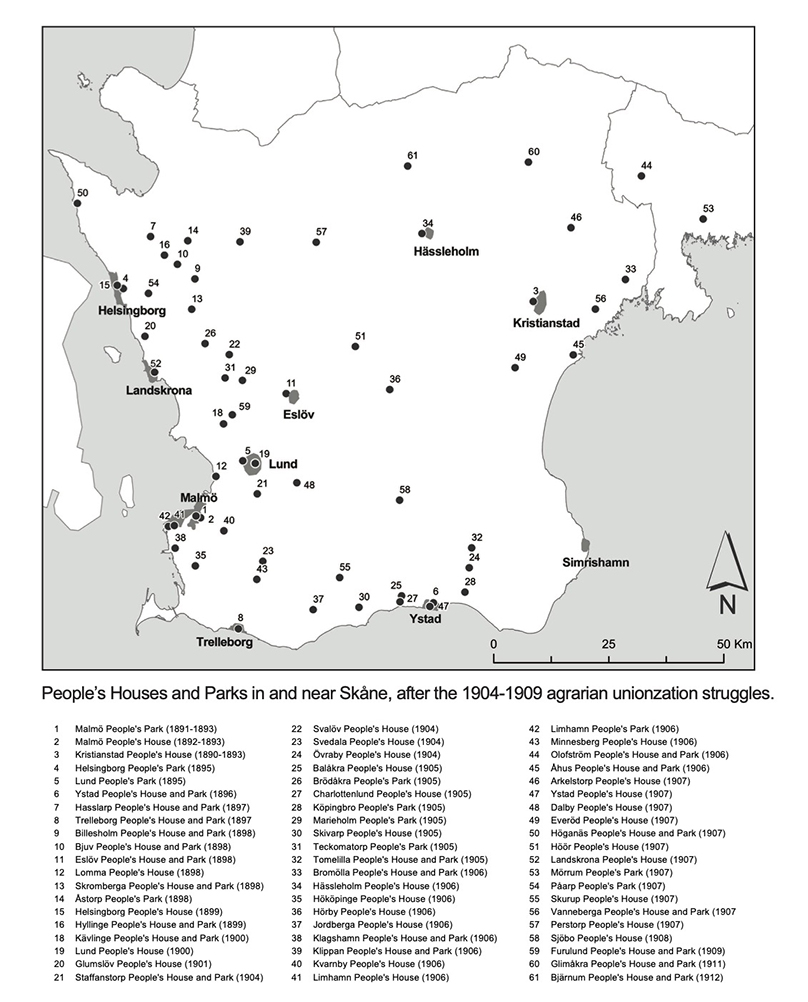
Both kinds of labor movement spaces spread quickly. A few decades later they were a common feature in almost all parts of Sweden with as many as 1500 People’s Houses and Parks documented nationally (Ericsson, 2024). First, parks and houses became a regional trend slowly spreading from Malmö. Later taken up by strong unions in major cities along the coast, the movement practice of creating local meeting spaces spread to smaller industrial communities. During an intense wave of unions organizing, and militant strike actions, on the agricultural fields of Skåne beginning 1904 –1909, the Parks and Houses became a definite feature also of the rural areas of southern Sweden (Pries et al., 2022). These spaces provided crucial assets in moments of acute labor strife but were also part of a cultural project of drawing together a popular community loosely affiliated with the cause of labor that provided these buildings and landscape in the name of “the people” (Jönsson et al., 2022). By 1909, (Figure 1) only 16 years after the first House and Park opened in Malmö, at least 59 such institutions existed in what is now Skåne County (Pries et al., 2022).
The People’s Parks and Houses powerfully speak to a unique and multifaceted history of popular space-making. This extraordinarily rich network of movement assembly spaces in many ways exemplify Nancy Fraser’s (1990) argument that the bourgeoise public sphere (which Habermas famously discussed) was accompanied by multiple “subaltern counter-publics”, in this case physical spaces primarily created by union workers. Counter-publics have, according to Fraser (1990: 68), a clearly geographical dimension – they encompass both “spaces of withdrawal” and “bases” for “agitational activities” facing the wider public. This description fits rather well with the Parks and Houses as they emerged in and around Malmö in the 1890s.
These spaces also related to early social democracy’s hegemonic claims (Billing & Stigendal, 1994). By providing public space for “the people,” social democracy positioned organized labor as a patron of the national political community (Jönsson et al., 2022). The Parks and Houses thus heralded a more democratic society in which controversial ideas could be expressed publicly, something far from guaranteed under oligarchic rule (Pries, 2020). They also show how ordinary people, through popular movements, shaped modern Swedish history in ways often forgotten in accounts focused on postwar welfare state reforms (Pries et al., 2020). In the Öresund region, these spaces are especially important because this is where such movement tactics were introduced and developed into a typology later found across Sweden. Yet their historical significance is almost impossible to grasp when visiting these sites today.
A Typology of Skåne’s Labor Movement Spaces Heritage
A complete list of all the different People’s Houses and Parks of Skåne with their years of founding and diverse fates does not exist and would be almost impossible to compile. Still, as the map above indicates (Figure 1), enough information remains to preliminary map their formative years, that can inform and guide field studies of some of the more prominent spaces.
Based on this historical mapping, around a dozen of the most prominent of the early People’s Parks of Skåne have been repeatedly observed and documented in the mid-2020s. In Lund and Malmö, observations were made in a more frequent manner and complemented with thorough archival studies (see Pries 2017, Pries & Zalar 2025; Zalar & Pries 2026, in press). In Höganäs, the field studies include site visits combined with a more cursory study of available contemporary planning documents and historical material. In Ystad, more sporadic on-site documentation was combined with a more thoroughgoing work on the historical background and significance of the site (Pries et al., 2022). A common theme emerging from this multisite research is an almost complete lack of ways that the historical significance of these movement spaces is presented to visitors. Some Parks and Houses remain independent community assets, others have become municipal recreational facilities or been sold for redevelopment. Regardless of ownership, their early role in modern Swedish history is rarely communicated. At best, their heritage is transmitted within small local communities or referenced online (Ambjörnsson, 2025; Björnér, 2025).
The four cases below illustrate both this lack of historical interpretation and the different ways it appears in the landscape. Some parks preserve artifacts without explanation; others have removed them, retained them only as aesthetic fragments, or continued as movement-controlled spaces without emphasizing their history. Thus, there overall lack of a didactic framing of these parks as radically democratic spaces made by grassroots movements might take on very different forms. Together, the cases suggest a preliminary typology of movement assembly spaces that persist as built heritage without being widely understood as politically significant public spaces.
Malmö People’s Park 1891/1892: Movement Heritage Without Political Salience
The People’s Park in Malmö, which in 1991 was bought by the municipality to be used as public green space, is a good example of how these spaces are left with a multifaceted and unique heritage, yet little is done to present the significance of these sites. Most of the original features of the park still stand, including restaurants, much of the greenery, a more than hundred-year-old entrance declaring it to be Folkets park as well as several busts of prominent local labor leaders with a connection to the park (Figure 3). Yet, there is next to no evidence to why this would be the case for the casual visitor. It is impossible to gauge for even the most curious visitor that the Park is the first of its kind in the world, and that it set the stage for an important type of political meeting spaces in the struggle for democracy in Sweden and the most common kind of leisure facility in the years that followed mass democracy. The entire park has been threatened by comprehensive redevelopment many times since the municipality gained control of the land, with arguments from the right about cleaning house in the social democratic one-party city-state (Pries & Jönsson, 2019). Most impressive of all remains from the early days is the still-standing 1903 Moorish Pavilion, designed by local architect Aron Krenzisky. With its seven domed towners it is said to have been the city’s largest restaurant and certainly belongs to the most impressive buildings ever constructed by a social movement in Sweden (Figure 2). Yet despite the park’s preservation, its layered political and cultural history is almost entirely absent from the visitor experience.
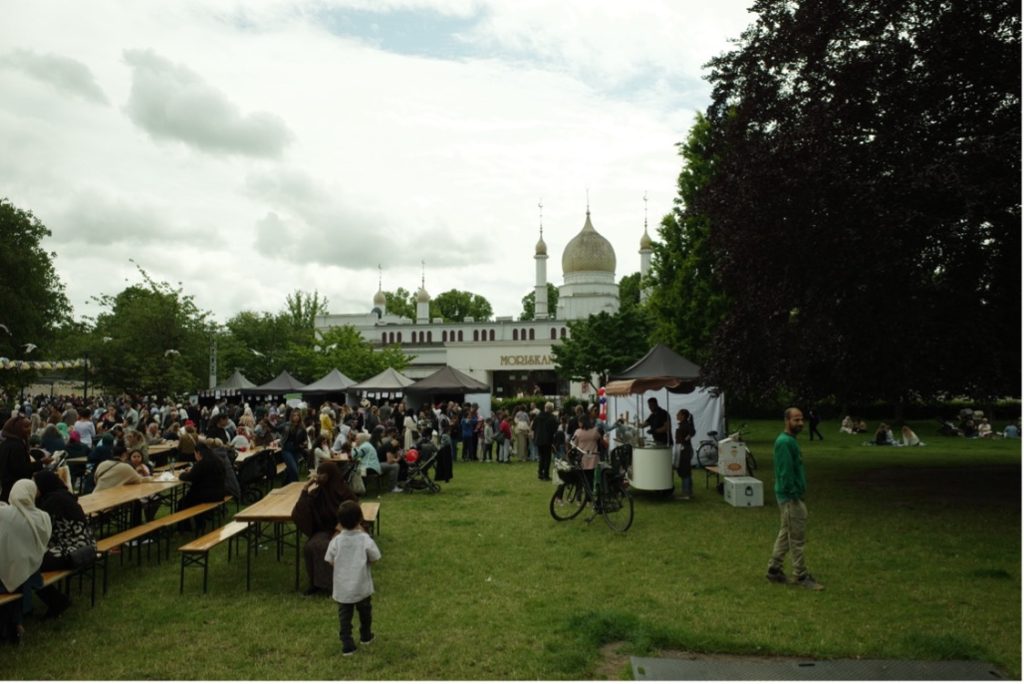
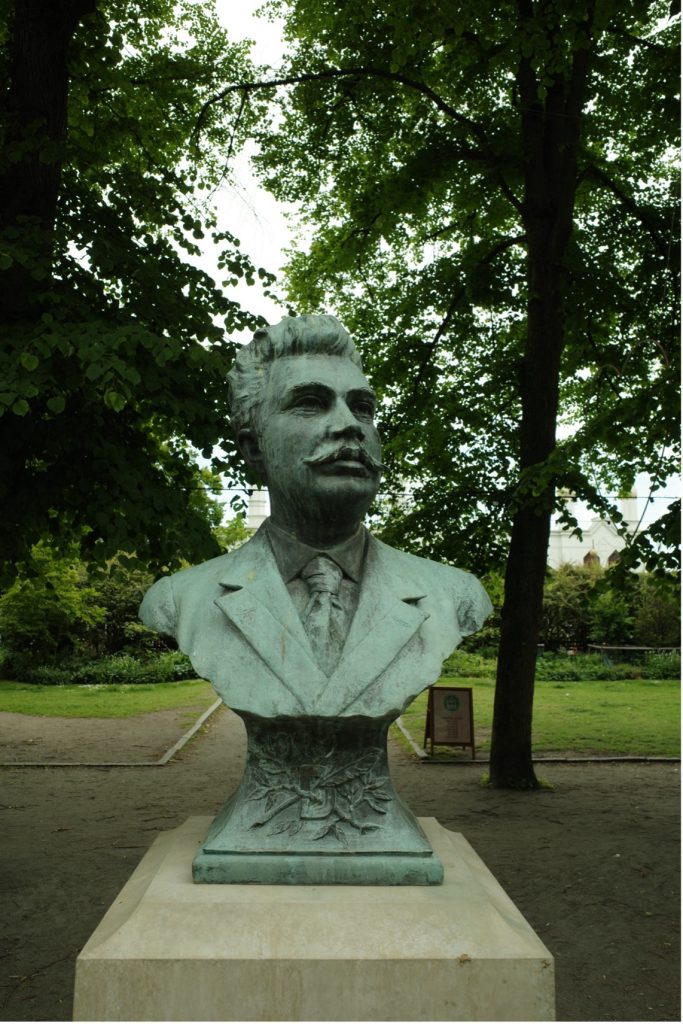
to lore the person who coined the term “Folkets” park. Photo by Johan Pries, 2025
Lund People’s Park 1895: Preserving the Afterlives of Movement-made Spaces
Shifting north from Malmö to Lund, there is a similar yet somewhat different story. The second of the Swedish People’s Parks was opened in Lund in 1895, and just like Malmö’s Park it has now become a municipal green space. While the landscape itself still carries many traces of the Park, whose greenery the workers began to plant in the mid-1890s, there is nothing in Lund that speaks of the Park’s role as a political and cultural asset created, owned and managed by popular movements. Buildings from the People’s Parks era have been demolished in preparations of 1970s urban renewal, the elaborate entrance that proclaimed the space as a People’s Park has been scrapped and even the name has been changed to the more ambiguous Folkparken. In recent preservation struggles, heritage attention focused largely on a 1976 recreational facility designed by brutalist architect Bengt Edman after the site had already become a municipal park (Zalar & Pries, 2026 in press). The building has today been carefully preserved and re-opened as a municipal library, culture venue, band rehearsal space and dance school (Figure 4 &5). Yet, no efforts have been made to re-situate the park within its history as a crucial popular movement asset from a time of intense struggle for democratic rights or even the later history of the park as a movement leisure space in the interwar and early postwar years (Pries & Zalar, 2025).
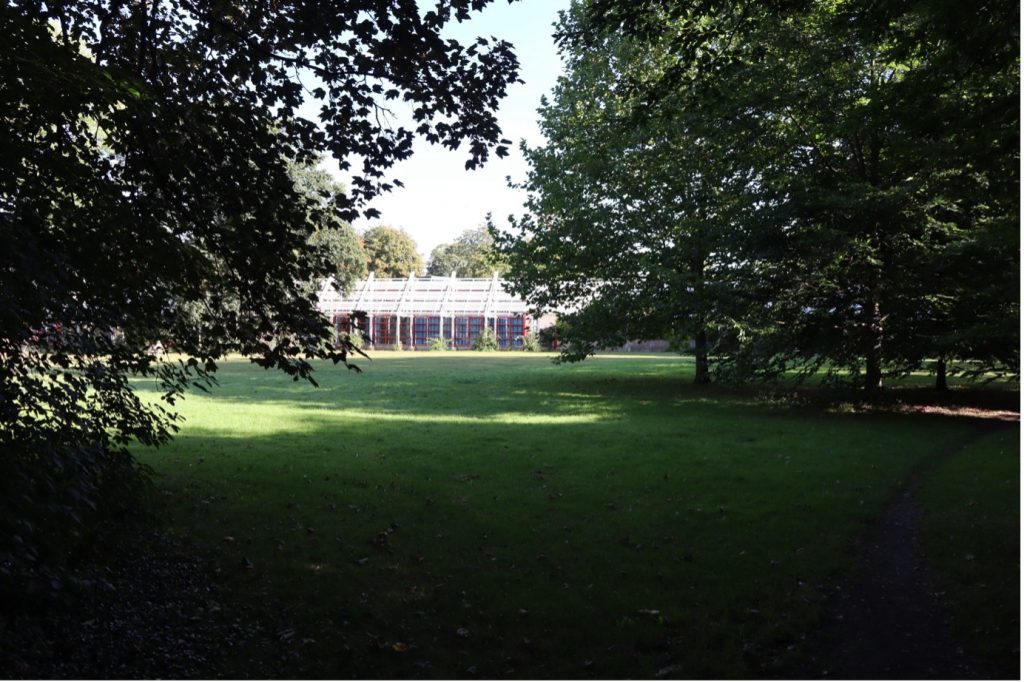
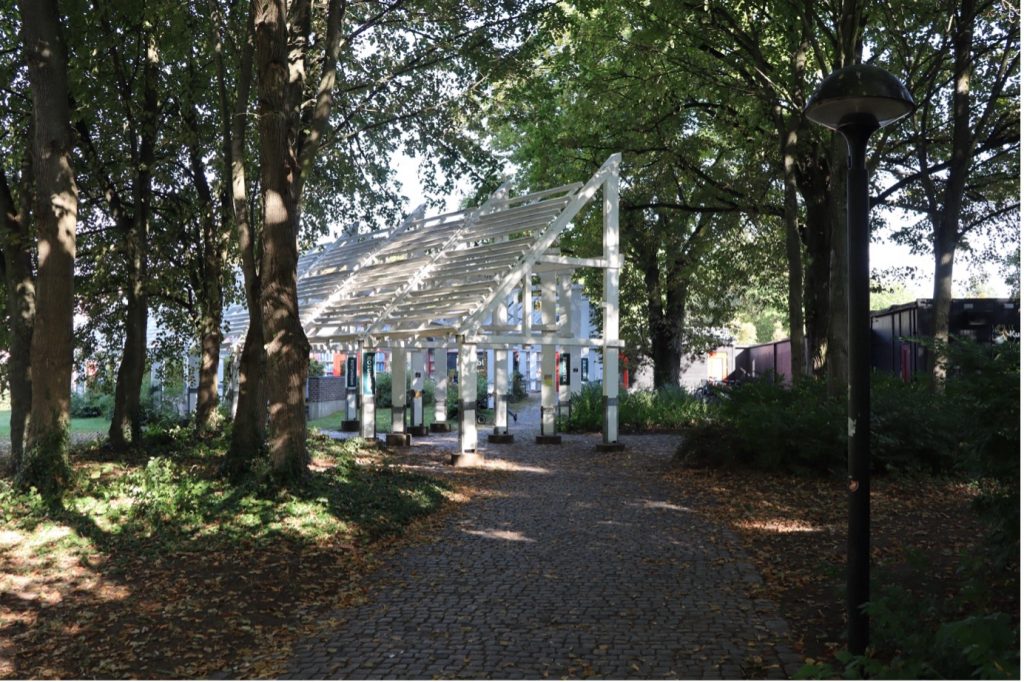
Höganäs People’s Park 1907: Preservation as Permission to Renew
A more bitter example, yet also much more explicitly historically referencing development, appears in the once magnificent People’s Park in Höganäs, north of Helsingborg. For long, Höganäs was a center of union militancy beginning in the region’s mines and later shifting to the large manufacturing plants for the famous ceramic slabs. The People’s Park once had a dance hall in a mid-century modern style, all decked out in luxuriously glazed slabs, but the building was demolished in 2018 to make space for a municipal park and a block of unremarkable apartments. Despite the massive redevelopment, several remnants remain. Much of what once was the park remains as a public green space, a public artwork celebrating the labor movement still stands in what was the park (Figure 6) and the old concrete entrance with its 1960s cast iron Folkets park sign has been preserved (Figure 7). As in Malmö and Lund, visitors are given little indication of the historical meaning of these remnants. Still, their preservation is notable, especially because Höganäs did not avoid housing redevelopment as Malmö and Lund did.
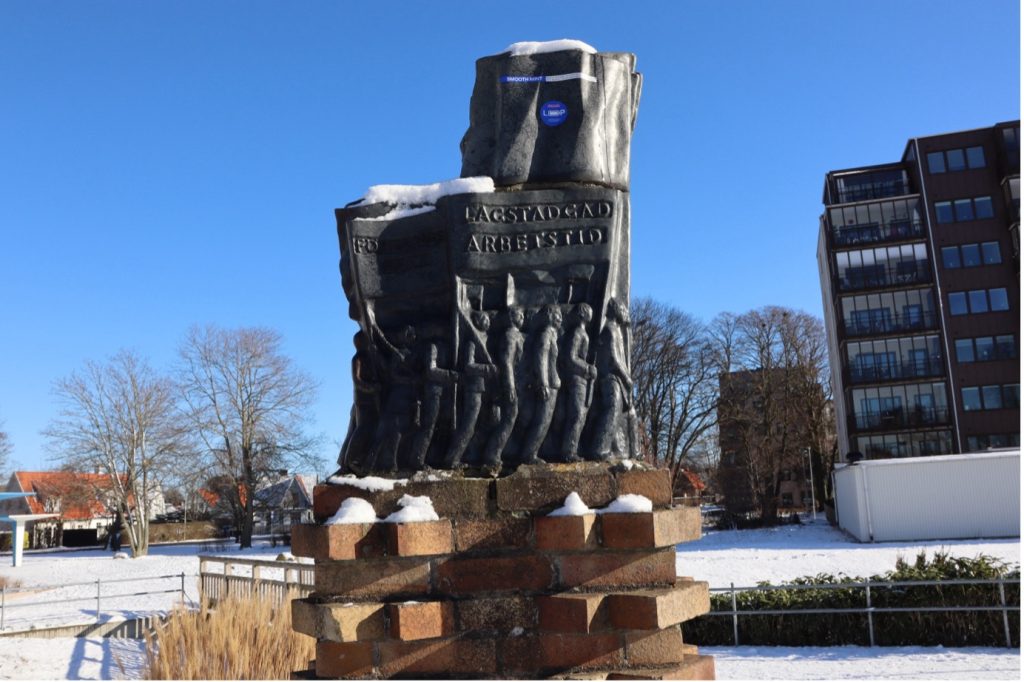
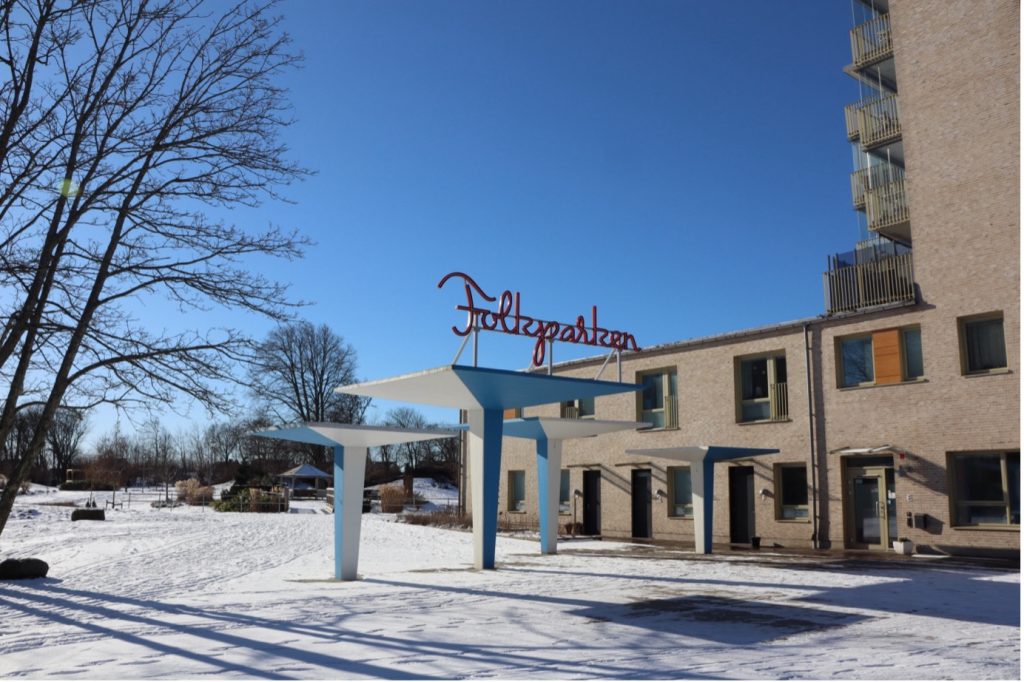
Ystad People’s Park 1896: the Quiet Perseverance of Movement Space
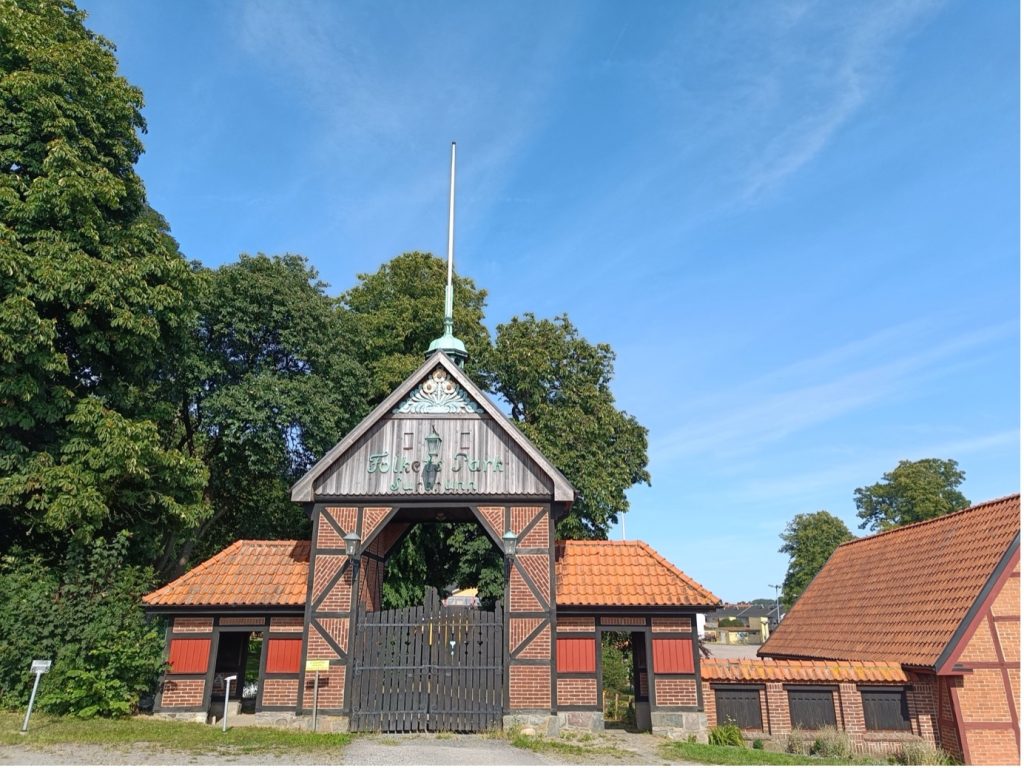
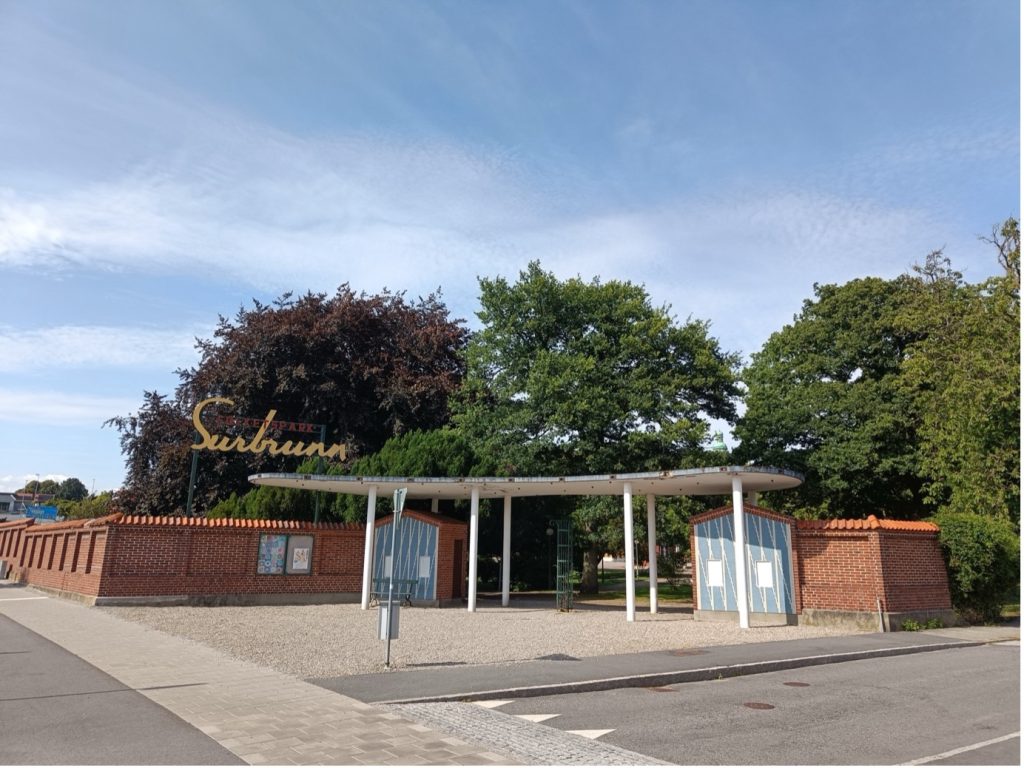
Finally, a fourth way that this heritage is present today can be found in Ystad, a medieval port town and favored tourist destination on Skåne’s Southern coast. Ystad’s People’s Park from 1896 is still run by the association that founded it 130 years ago, although it is decisively less well-used than in its early days when thousands would visit it on weekend nights for music, drinks, theatre and dance (Pries et al., 2022). What once were the town’s outskirts is now a rather centrally located green space, and open to the public as if it was a municipal park. Much of the park’s original features are still there, including several buildings used for nightlife events as well as political meetings and two different entrances, both insisting that this remains the People’s Park (Figure 8 & 9). Just as in Malmö, Lund and Höganäs, there are few if any indicators providing a context elucidating the historic relevance of this space. Yet, this absence means a particular thing in Ystad. Here it is a piece of living movement history, perhaps less lively than it once was. It is one of many remaining social movement assembly spaces created from a historical need for places of struggle and passed on for future generations to use.
Dispensing with the Consolations of Nostalgia or Writing Bastions of Democratic Politics out of History?
Our provisional mapping suggests at least four ways Skåne’s labor movement spaces persist as heritage. Malmö represents the well-preserved municipal park with rich but underexplained heritage. Lund represents the altered municipal space where older movement traces have been largely displaced. Höganäs shows the redeveloped site where artifacts remain as aestheticized historical references. Ystad represents the communally owned movement space that survives as living political heritage, though with limited historical interpretation. No matter how well-preserved these spatial remains of this urban movement history are, they are all almost completely disembodied from their historical context as sites of political contestation. They all invoke a vague sense of being of the past, but which past remains obscure. Looking beyond Skåne, other forms likely exist, including sites that have disappeared entirely or survive only as ruins.
It is certainly noteworthy that association-run parks like Ystad’s do not appear overly concerned with this past either. As Wendy Brown (2001), drawing on Nietzsche, reminds us, history can orient us away from present political tasks. Rather than the politics of changing history in the present, politics can be pulled “out of history” (Brown, 2001) by the nostalgic attachments to past events and processes no longer politically active. For those using inherited political space for politics, forgetting these local histories as subaltern counter-publics, may be one way to focus on the present.
Still, it is remarkable that these spaces are presented as having so little historical significance despite their imbrication in so many different aspects of Sweden’s political history. It is worth recalling that there are still remnants of how masses of ordinary people not only demanded, but created “counter-publics” expanding democratic freedom. This political mode of grassroots production of urban space was crucial to the democratic politics which emerged from this moment and came to play a crucial role in democratizing the Swedish state in the 1920s. The notion of popular movement spaces as a precondition for democratic life still shapes politics today. The idea that popular movement spaces are preconditions for democratic life still matters, especially amid renewed authoritarian nationalism. Indeed, the fact that these spaces were sustained by being embedded in popular culture, allowing movements to survive waves of state repression, speaks powerfully to the present political challenges of authoritarian nationalism and its antidemocratic variants once again emerging.
Perhaps this history is easy to forget because values once confined to subaltern counter-publics became embedded in the welfare-state public realm. As Fraser (1990: 68) argues, counter-publics not only offer refuge but also offer ways to for the subaltern to change the hegemonic construction of publicness. They challenge and expand who and what counts as “the public”. If the memory of these spaces faded because their values seemed permanently absorbed into Swedish public life, that explanation no longer holds. These values of popular co-production of the public realm have been undermined by decades of neoliberalism culminating in the direct assault on this articulation of publicness by the nationalist hard right. In the current conjuncture, the history of how these movement spaces shifted from fringe counter-publics to a model of popular democratic life matters more than in a century.
Furthermore, what remains of the Parks and Houses also speaks to less well-known aspects of Swedish social democracy, which nuance the bedtime stories of the welfare state and the hubris of their technocrats as the only spatial politics of social democracy. Instead, they point to a social democracy that was popular rather than technocratic, forgivingly open-minded in its engagement with plebian taste rather than narrowly respectable and libertarian in its attitude to create communal institutions on the go rather than statist in the desire to control bureaucratic machinery for grand and utopian designs. Beyond these more complex and nuanced processes, each of the parks mentioned has played important roles in political events at the local scale that make them worthy of being preserved and presented as historical sites, not at least when it comes to decades of voting rights struggles before Sweden’s 1919-1921 universal suffrage reforms.
None of this historical context is provided at the sites themselves. Perhaps because it would entail engaging with the politics of public space beyond its presentation as a neutral good without connections to class or contentious politics which surely would risk making contemporary politicians feel ill at ease. Our provisional survey shows that much remains to preserve in terms of this unique social movement heritage. It also shows that there is almost nothing being done to provide the context which is absolutely necessary for a visitor to understand the historical significance of these spaces. The dangers of escaping to nostalgic movement history of lost struggles notwithstanding, there is much work to be done to preserve and re-present these spaces as historic sites for new audiences, considering the threats to democratic politics that we face
References
Ambjörnsson, A. (2025) “Folkets park i brand. Minnet av Folkets park i Anderslöv. Arbetarhistoria, 2025(193-194).
Billing, P & Stigendal, M. (1994) Hegemonins Decennier: Lärdomar från Malmö om den svenska modellen. Malmö: Möllevångens Samhällsanalys.
Björner, E. (2025) “Torpstrejk 1908–1909. Vanneberga Folkets hus och torpstrejken i Trolle-Ljungby”. Arbetarhistoria, 2025(193-194).
Brown, W. (2001) Politics Out of History. Princeton University Press.
Ericsson, L. (2024). ”Folkets hus och parker i Sverige (omkring 1500).” OEI 104-105.
Fraser, N. 1990. “Rethinking the Public Sphere: A Contribution to the Critique of Actually Existing Democracy.” Social Text 25 (26): 56–80.
Jönsson, E., Pries, J., & Mitchell, D. (2022). “The People’s Park is bigger, more freely located, more beautiful and–Our own park”: Workers, parks, and the spaces of class struggle in turn of the century Norrköping, Sweden. Environment and Planning D: Society and Space, 40(6), 1100-1121.
Mitchell, D., Jönsson, E., & Pries, J. (2021). “Making the People’s landscape: Landscape ideals, collective labour, and the People’s parks (Folkets Parker) movement in Sweden, 1891-present.” Journal of Historical Geography, 72, 23-39.
Pries, J. (2017) Social neoliberalism through urban planning: Bureaucratic formations and contradictions in Malmö since 1985. Lund University.
Pries, J., & Jönsson, E. (2019). “Remaking the People’s Park: Heritage Renewal Troubled by Past Political Struggles?” Culture Unbound: Journal of Current Cultural Research, 11(1), 78-103
Pries, J., & Zalar, A. (2025). “Folkparken i Lund: En bortglömd arbetarhistoria.” Arbetarhistoria, 2025(193-194).
Pries, J., Jönsson, E., & Mitchell, D. (2020). “Parks and Houses for the People”. Places Journal.
Pries, J., Jönsson, E., & Mitchell, D. (2022). “Red outposts in a hostile landscape: People’s houses, People’s parks and the reconstruction of rural southern Sweden’s political geography, 1889–1909”. Political Geography, 99, 102766.
Zalar, A. & Pries, J. “Queering Brutalist Heritage: Transforming Patriarchal Coherence in Architectural Preservation— the Case of Folkparken, Lund (Sweden)” in Nuler, J & Stackmann, S. (eds.) Unvoiced Heritage – Queer-Feminist Care for Tabooed Spaces within the Existing Urban Fabric (in press, 2026).
Kartor och digitala arkiv
Kartorna över Möllevången är hämtade från Malmö stads historiska kartatlas och publicerade med tillåtelse från stadsbyggnadskontoret, Malmö stad. Bilden innehåller utsnitt ur följande kartor: Utökad stadsplan 1897, Pharus plan Turistkarta 1914, Stadskarta 1947. https://stadsatlas.malmo.se/stadsatlas/
Biographies
Johan Pries, Associate professor (Docent) at the Department of Human Geography, Lund University. Pries is a political geographer who specializes in spatial planning and popular movements. In recent years, both subjects have become increasingly intertwined with his long-standing interests in cultural heritage and the relationship between the landscape and the product of historical processes. Furthermore, Pries is concerned with the significance that places and buildings are understood to have as remnants of specific historical formations.
Alva Zalar, Researcher (PostDoc) at the Department of Human Geography, Lund University.
Zalar explores how urban planning can contribute to a fairer and more equitable society, particularly in projects with a clear focus on environmental sustainability. She is interested in how planning interprets and influences existing built environments and their inhabitants when new visions for the sustainable cities of the future are presented.